
Nevada LLC Taxes and Annual Fees Explained
Editorial Team
eCorp Services
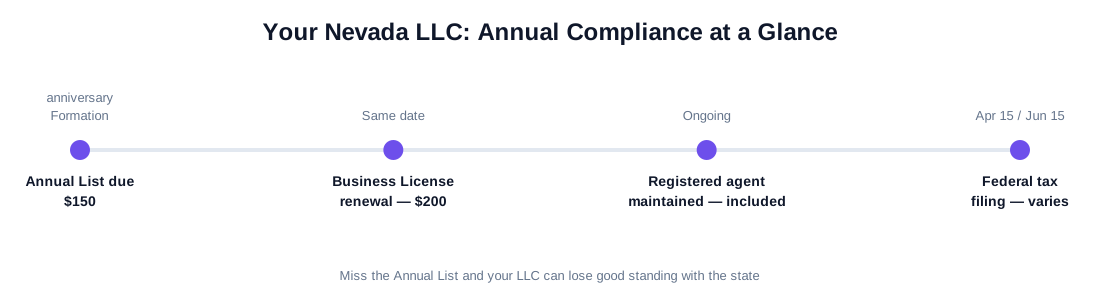
Nevada's "no state income tax" reputation is accurate — and it's also the single most misunderstood fact about running a business there. No income tax does not mean no fees. Every Nevada LLC has recurring annual obligations, and missing them is one of the most common (and most avoidable) ways founders lose good standing.
This is the complete breakdown: what's due, when, and what happens if you miss it.
---
What "No State Income Tax" Actually Means
Nevada charges no corporate income tax and no personal income tax. If your LLC is profitable, Nevada itself doesn't take a cut of that profit the way California, New York, or dozens of other states would. This is real, and it's a genuine advantage.
What it doesn't mean: no fees, no filings, and no federal tax obligations. Those still apply, in full, regardless of which state your LLC is formed in.
The Two Annual State Filings
Every Nevada LLC has two recurring state-level obligations, due together on your LLC's anniversary date each year:
| Filing | Amount | Frequency |
|---|---|---|
| Annual List of Members/Managers | $150 | Annually |
| State Business License Renewal | $200 | Annually |
| Total recurring state cost | $350/yr | — |
On top of these, most LLC owners also pay a registered agent renewal fee (typically $150–$250/yr unless bundled into a formation plan), bringing the realistic total closer to $500–$600/yr. We break down the full cost picture, including formation and ongoing fees, here →.
What Happens If You Miss a Deadline
Nevada doesn't send excessive warnings, and the consequences escalate quickly:
- Late fee: A $75 penalty is added if the Annual List isn't filed by the due date.
- Default status: Your LLC is marked delinquent, which can affect its standing with banks and vendors.
- Revocation: If the filing remains outstanding long enough, the state administratively revokes your LLC's charter — at which point you lose your liability protection and your business name becomes available for anyone else to claim.
- Reinstatement cost: Bringing a revoked LLC back into good standing costs more than simply filing on time would have.
This is exactly why a reliable registered agent matters — a good one tracks these deadlines and alerts you well before they're due, instead of leaving you to remember on your own.
Federal Tax Obligations Don't Disappear
Nevada's tax advantages are state-level only. Federal tax law applies to every US LLC regardless of formation state:
- Self-employment tax: If you're actively involved in running the LLC, its pass-through income is generally subject to federal self-employment tax (Social Security + Medicare), currently around 15.3% on net earnings.
- Federal income tax: Pass-through profits are reported on your personal federal return and taxed at your individual rate.
- Foreign-owned single-member LLCs: If you're a non-US resident who owns 100% of a US LLC treated as a disregarded entity, you're generally still required to file an annual informational return (Form 5472, filed with a pro-forma Form 1120) even if the LLC owes no US tax. Missing this specific filing carries steep IRS penalties — this is a common and costly mistake among international founders.
You'll need an EIN to handle any of this correctly. Here's our full guide to getting one without a US SSN →.
Sales Tax and the Nevada Commerce Tax
If you sell physical goods, you may owe Nevada sales tax on sales with sufficient connection ("nexus") to the state — this applies most directly to sellers with Nevada-based inventory, employees, or a registered agent address used as a place of business. Nevada also levies a Commerce Tax on businesses with substantial gross revenue, though the threshold is high enough that most small and mid-sized LLCs fall well under it.
Sales tax and nexus rules vary by business model and are genuinely easy to get wrong — this is one area where it's worth a short consultation with a tax professional rather than guessing.
Keeping Up With It All
The recurring theme across every Nevada LLC compliance obligation is the same: nothing here is expensive or complicated in isolation, but missing a deadline compounds fast. eCorp's Pro and Premium plans include compliance tracking and renewal reminders specifically so this doesn't fall through the cracks.
See current plans and what's included →
This guide provides general information only and is not legal or tax advice. Tax obligations vary based on individual circumstances — consult a qualified tax professional before making filing decisions.