
Nevada LLC for E-Commerce Sellers: The Complete Setup Guide
Editorial Team
eCorp Services
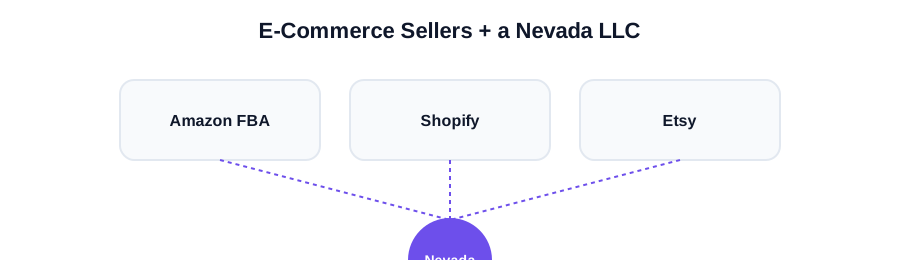
If you sell on Amazon, Shopify, Etsy, or your own storefront, forming a Nevada LLC changes how your business is taxed, how it's protected legally, and how seriously banks, payment processors, and B2B suppliers take you. Here's what's actually different about setting one up as an ecommerce seller specifically — and where sellers most often go wrong.
---
Why Ecommerce Sellers Choose Nevada
The core reasons are the same ones that make Nevada popular generally — no state income tax, strong privacy protections, and no franchise tax — but they matter in specific ways for online sellers. Nevada doesn't tax the profit from your Shopify store or Amazon FBA business at the state level, and because most online sellers aren't tied to a physical Nevada storefront, there's no operational reason to form in a state you don't actually live or work in.
Liability protection matters more than people expect here too: product liability claims are a real risk for physical-goods sellers, and an LLC keeps a claim against your business from reaching your personal assets — as long as you keep business and personal finances properly separated.
Setting Up: What's Different for Online Sellers
Step 1: Form Your LLC
The formation process itself is identical to any other Nevada LLC — Articles of Organization, a registered agent, and the initial state filing. See the full step-by-step formation guide →.
Step 2: Get Your EIN for Marketplace Accounts
Amazon Seller Central, Shopify Payments, and most B2B suppliers require an EIN to set up a business account — using your personal SSN on a business marketplace account mixes your personal and business tax identity in a way that undermines the point of forming an LLC in the first place. Non-US residents can get an EIN without an SSN — here's exactly how →.
Step 3: Open a Business Bank Account Built for Ecommerce
Marketplace payouts (Amazon, Stripe, PayPal) should land in a dedicated business account, not a personal one. This matters even more for ecommerce sellers than most businesses, because payout volume and frequency make commingled funds especially messy to untangle later — and messy books are exactly what erodes your liability protection if you're ever challenged in court.
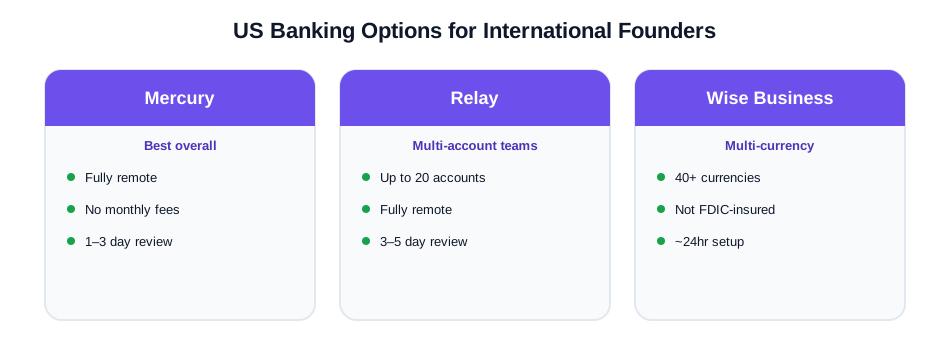
See our full comparison of business banking options →.
Step 4: Register for Sales Tax Where You Have Nexus
This is the step that trips up more ecommerce sellers than any other. "Nexus" is the legal threshold that determines whether a state can require you to collect and remit its sales tax — and it's no longer just about having a physical presence. Most states now also apply "economic nexus," triggered once your sales into that state cross a revenue or transaction-count threshold, regardless of where your LLC is formed.
Sales tax nexus rules vary by state and change periodically — this is a genuinely complex area, and it's worth a conversation with a tax professional rather than guessing based on a blog post (including this one).
Marketplace Facilitator Laws: What They Do and Don't Cover
Most states now have "marketplace facilitator" laws that require platforms like Amazon and Etsy to collect and remit sales tax on your behalf for sales made through their marketplace. This removes a substantial amount of manual sales tax work — but it doesn't eliminate your obligations entirely:
- Sales through your own Shopify store or website are typically not covered by marketplace facilitator collection — you're responsible for those directly.
- You may still need to register for a sales tax permit in states where you have nexus, even if the marketplace is remitting the tax for you.
- Income tax and the federal filings covered in our Nevada LLC taxes and annual fees guide still apply regardless of who's collecting sales tax.
LLC or Sole Proprietorship for Online Sellers?
Many sellers start as an informal sole proprietorship — selling under their own name with no formal entity — and it's easy to see why: it's free and requires no paperwork. But it also means zero liability protection: if a product causes injury or a supplier dispute turns into a lawsuit, your personal assets are exposed with no legal separation. We compare LLCs against corporations in detail here → — for most solo ecommerce sellers, the LLC is the more practical structure of the two, but neither compares favorably to operating as an unincorporated sole proprietor once you're selling at real volume.
Common Mistakes Ecommerce Sellers Make
- Commingling marketplace payouts with personal accounts. The fastest way to lose your liability protection is to run business income through a personal PayPal or bank account.
- Missing the Annual List deadline. Sellers running lean, fast-moving operations are exactly the founders most likely to lose track of a once-a-year state filing — know your deadlines in advance.
- Using a personal or freight-forwarder address as the registered agent address. This doesn't satisfy Nevada's requirements and puts your compliance at risk. Here's what a registered agent actually needs to be →.
- Ignoring economic nexus until a state sends a notice. By then, you may owe back taxes and penalties for periods you didn't realize you had an obligation.
Getting Started
Forming the LLC itself takes under 10 minutes with eCorp — registered agent, filing, and EIN assistance included in the Pro plan. The parts that take more care are the ones specific to ecommerce: banking, EIN setup for marketplace accounts, and staying ahead of nexus obligations as you scale.
This guide provides general information only and is not legal or tax advice. Sales tax nexus and marketplace facilitator rules vary by state and change over time — consult a qualified tax professional for guidance specific to your business.